 Visa – Careerzi Immigration. Visa & Abroad Things
Every year, millions of people submit applications for the U.S. Diversity Visa Program hoping to receive a Green Card and start a new life in the United States. But a surprising number of applicants get disqualified before the lottery process even begins — often because of small mistakes made while filling out the application form.
The reality is simple: the DV Lottery application itself is free and relatively short, but it is extremely strict. A single incorrect answer, photo issue, or missing family member can permanently invalidate an entry.
This guide explains how the US Diversity Visa application form works, what information applicants must prepare, and which mistakes commonly lead to rejection or disqualification.
If you are planning to apply for:
- DV lottery State gov 2027
- DV Lottery State gov 2028
then reading this guide carefully before submitting your application may save you from serious problems later.
What Is the DV Lottery Application Form?
The Diversity Visa application form is the official online entry submitted through the U.S. government’s Electronic Diversity Visa Program.
This is the first stage of the DV Lottery process.
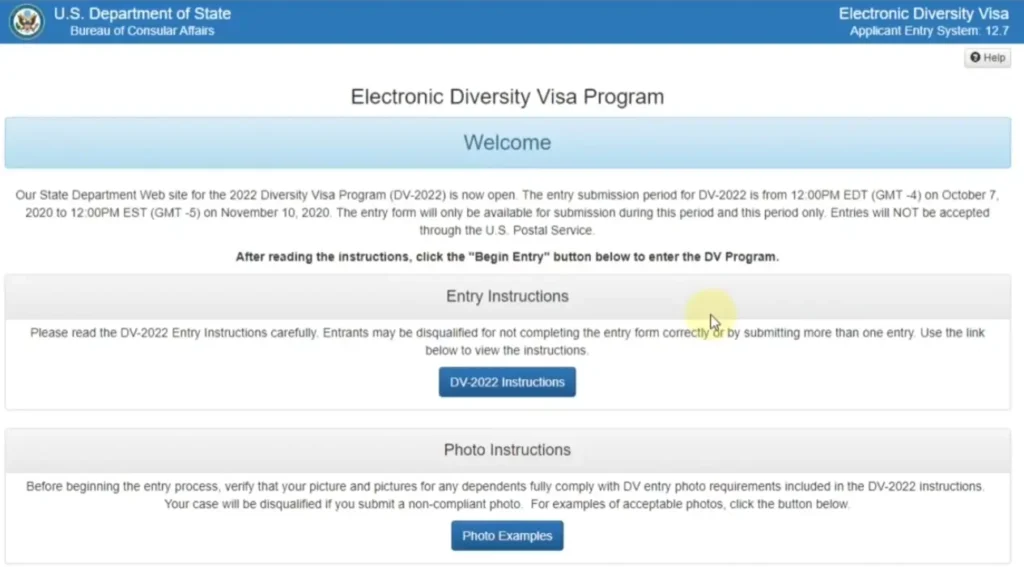
Applicants enter personal details such as:
- Full legal name
- Date of birth
- Gender
- Country of birth
- Passport-related information (when required)
- Marital status
- Education details
- Current address
- Photo upload
- Spouse and children information
Many people wrongly assume the form is “simple,” so they rush through it carelessly. In reality, the application is treated as a legal immigration record.
Information submitted now may later be compared during:
- DS-260 processing
- Background checks
- Visa interview
- Embassy verification
- Immigration screening
Even small inconsistencies can create problems later.
Why So Many DV Lottery Applications Get Disqualified
One of the biggest misconceptions about the DV Lottery is that selection is only based on luck.
Luck matters — but eligibility and accuracy matter first.
Before the computer even randomly selects winners, many entries are automatically removed because of technical or eligibility problems.
Common disqualification reasons include:
- Incorrect photo format
- Duplicate entries
- Wrong country eligibility
- Missing spouse information
- Missing child information
- Spelling inconsistencies
- Fake education claims
- Incorrect birth details
- Submitting multiple applications
- Using heavily edited photos
Most applicants never realize they were disqualified because the system usually does not notify them.
Understanding Country Eligibility Correctly
One of the most misunderstood parts of the application is country eligibility.
The DV Lottery is based primarily on country of birth, not nationality or citizenship.
For example:
- A person holding a Canadian passport but born in Bangladesh is usually charged to Bangladesh.
- A person living in Dubai for 15 years is still usually charged to their country of birth.
- Permanent residency in another country normally does not change DV eligibility.
This creates confusion for dual nationals and long-term expatriates.
How Dual Nationality or Dual Residency Applicants Should Apply
Many South Asian applicants live abroad in countries like:
- UAE
- Saudi Arabia
- Malaysia
- Singapore
- Qatar
- United Kingdom
- Canada
Some also hold dual nationality.
Important point:
DV Lottery eligibility is usually determined by birthplace — not by current residence or second passport.
However, there are legal exceptions called “cross-chargeability.”
You may sometimes apply using:
- Your spouse’s country of birth
- Your parents’ country of birth (under limited conditions)
This is especially useful when your birth country becomes ineligible or heavily oversubscribed.
Because this area can become legally sensitive, applicants with complex nationality situations should carefully review official instructions before submission.
The Most Important Part: DV Lottery Photo Requirements
The photo is one of the biggest reasons applicants fail.
The system uses facial recognition and technical validation methods. Poor-quality or manipulated images may trigger automatic disqualification.
10 Common photo mistakes include:
- Old photos
- Edited backgrounds
- AI-enhanced images
- Beauty filters
- Incorrect size
- Shadows on face
- Wearing sunglasses
- Cropped images
- Low-resolution uploads
- Reusing previous DV photos
Many applicants unknowingly use studio photos that violate official rules.
Some photo studios also recycle old templates for multiple customers, which can create duplicate detection issues.
Should You Use an Agent or Apply Yourself?
Many people use agents because they fear making mistakes. In some countries, this has created a large unofficial “DV Lottery business industry.”
But applicants should understand the risks.
Some agents:
- Keep confirmation numbers secret
- Use their own email addresses
- Submit duplicate entries
- Enter false education information
- Add fake spouses or addresses
- Charge unnecessary fees later
The DV Lottery application itself is free.
If you use an agent, always make sure:
- You personally receive the confirmation number
- Your information is accurate
- You review the entire form before submission
- You keep screenshots and copies
Losing your confirmation number can become a major problem later.
Common Name and Passport Mistakes
Your name should match your official legal documents as closely as possible.
Problems often happen when applicants:
- Use nicknames
- Change spelling styles later
- Reverse surname order
- Omit middle names inconsistently
South Asian naming structures sometimes create confusion because documents may not match exactly across:
- Passport
- National ID
- Birth certificate
- Academic certificates
Consistency matters more than style.
Marital Status Mistakes That Cause Disqualification
This is one of the strictest areas of the DV Lottery process.
If you are legally married, you must usually include your spouse — even if:
- They will not immigrate
- You are separated but not divorced
- You currently live apart
Similarly, eligible unmarried children under 21 generally must be listed.
Failing to include eligible family members is one of the most common reasons selected applicants later get refused during interview processing.
Some people intentionally hide spouses thinking it increases chances. In reality, it often destroys the case later.
Education and Work Experience: Do Not Guess
Applicants often misunderstand the education requirement.
The DV Lottery generally requires either:
- A qualifying secondary education equivalent
OR - Qualifying work experience
Not all diplomas automatically qualify.
Some applicants mistakenly assume:
- Short training courses qualify
- Informal education counts
- Fake certificates can pass verification
Embassy officers may verify documents carefully.
Providing inaccurate education claims can lead to permanent immigration problems beyond just DV refusal.
Does Applying Early Increase Your Chances?
No.
The DV Lottery is not “first come, first served.”
Submitting during the first day does not improve your odds compared to submitting during the last week.
However, applying early does help reduce:
- Server congestion
- Last-minute technical problems
- Upload failures
- Internet issues
- Photo correction delays
So while timing does not increase probability, early preparation is still smart.
What Happens After You Submit the Form?
After successful submission, you receive a confirmation number.
This number is extremely important.
Without it, you cannot check results later.
The U.S. government does not usually email winners directly.
Applicants must manually check their status through the official system when results become available.
This is where many scams begin.
DV Lottery Scams and Fake Websites
Because the DV Lottery attracts millions of hopeful applicants, scammers aggressively target applicants every year.
Common scams include:
- Fake winning emails
- “Guaranteed selection” offers
- Paid VIP registration schemes
- Fake embassy calls
- Fake visa processing agents
- Fraudulent immigration consultants
Remember:
The official DV Lottery application itself is free.
No individual, agency, or consultant can improve your random selection chances.
Anyone promising “100% guaranteed selection” is misleading you.
What Happens If You Win the DV Lottery?
Winning the DV Lottery means you are “selected,” not automatically approved.
After selection, applicants usually go through:
- DS-260 immigrant visa form
- Civil document preparation
- Police certificates
- Medical examination
- Embassy interview
- Financial review
- Security background checks
Only after successful approval do applicants receive immigrant visas.
What Benefits Do DV Lottery Winners Receive?
Successful DV immigrants may eventually receive:
- U.S. permanent residency (Green Card)
- Legal work authorization
- Ability to live anywhere in the USA
- Social Security Number
- Access to education opportunities
- Path toward U.S. citizenship later
- Ability to sponsor certain family members in future
This is why the program remains highly competitive worldwide.
Important Advice for South Asian Applicants
South Asian applicants often face extra complications because of:
- Naming inconsistencies
- Documentation variations
- Birth registration issues
- Education equivalency confusion
- Overreliance on agents
The best approach is:
- Prepare documents early
- Use accurate information
- Follow official instructions carefully
- Avoid shortcuts
- Never submit duplicate entries
- Double-check every spelling and date
In immigration processes, small details can create very large consequences later.
Final Thoughts
The U.S. DV Lottery is one of the few immigration programs that allows ordinary people to apply for permanent residency without sponsorship, investment, or job offers.
But the process is far less casual than many people assume.
A rushed application, incorrect photo, forgotten family member, or inaccurate information can destroy an otherwise valid opportunity.
If you plan to apply for:
- DV lottery State gov 2027
- DV lottery State gov 2028
- Electronic Diversity Visa Program
then preparation and accuracy are your strongest advantages.
Before submitting your entry, take time to understand the process properly. Immigration opportunities are rare — and careful applicants usually place themselves in the best position for success.
For more immigration and visa-related guides, visit Visa.careerzi.com.